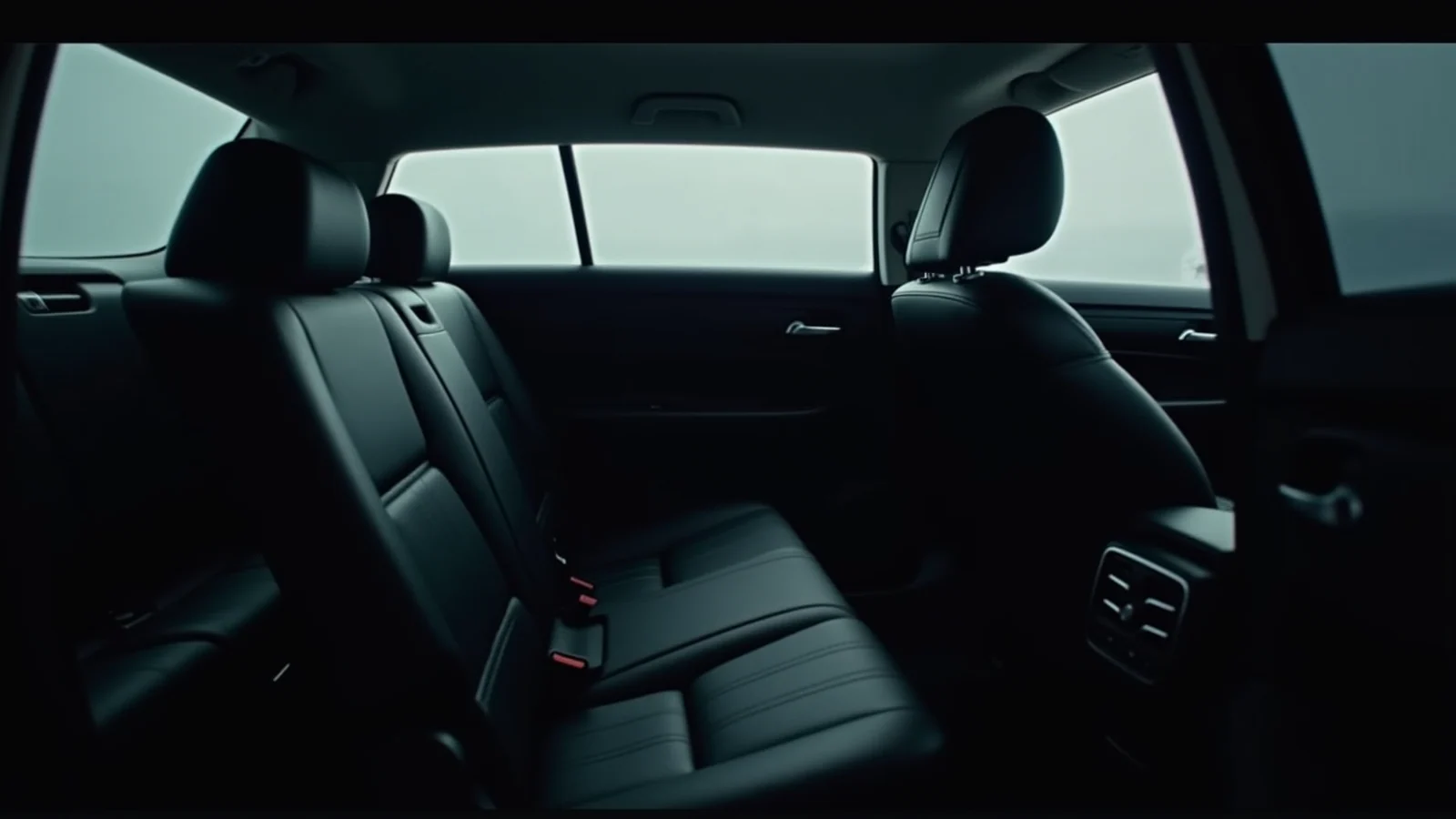
A power-folding seat is supposed to stop when it meets resistance. According to the recall Hyundai filed with the National Highway Traffic Safety Administration, the second-row seats in some 2026 Ioniq 9s may not.
The second-row power seats may fail to detect a person. As a result, the seats may continue to move after contacting a person during powered seat functions, such as automatic power fold-and-stow.
The consequence, as the recall states it: "A person, especially a child, may become trapped by a rear powered seat, increasing the risk of injury."
Which vehicles
- 5,360 model-year 2026 Hyundai Ioniq 9 SUVs with the Limited, Calligraphy or Calligraphy Design trim, built from March 17, 2025 to May 4, 2026 at Hyundai Motor Group Metaplant America in Georgia.
- Hyundai estimates that all of them have the defect.
- NHTSA campaign 26V588000; Hyundai's recall number is 307. VINs have been searchable on NHTSA.gov since September 12.
What went wrong
The seat's software, in Hyundai's filing, "may not detect contact with an occupant or object as intended." In Hyundai's own testing, some second-row fold-and-stow motions pressed with more force than the limits Hyundai and an outside engineering firm had set. The third-row seats tested within those limits.
Hyundai reported five consumer complaints, including two alleged minor injuries, with the first dated June 2025. It met NHTSA's defect investigators in August and decided on the recall on September 2. Vehicles built from September 3 carry new software.
What to do now
Letters are not due until November 9. Until the fix, the recall's own guidance:
Owners are advised to exercise caution when operating the second-row power seat functions until the repair is performed. Children are advised not to be in the rear seats or near the rear seating area during power-folding operation.
The seats move only when someone presses the seat controls, so the interim precaution is about who is in the second row when those controls are used.
The fix: a free software update, sent over the air to owners enrolled in Hyundai's Bluelink service or done at a dealer. Hyundai customer service: 1-855-371-9460.
Two more recalls the same week
- Volkswagen and Audi, 208,724 vehicles (NHTSA 26V590000): 2018–2019 VW Atlas, 2018 VW Tiguan and 2019–2021 Audi Q3. "One of the bolts that attaches the steering rack to the subframe may corrode and break. If this happens, the steering rack housing can break." The result can be "a loss of steering control, increasing the risk of a crash." Volkswagen estimates 1 percent of them have the defect, and reports three field cases, all outside North America. The warning sign in the filing is a metallic rattle or knock from the front axle, most likely while parking or moving slowly. Dealers replace the bolt free; letters go out November 10. VW customer service: 1-800-893-5298.
- Farber Specialty Vehicles, 69 wheelchair-lift vehicles (NHTSA 26V592000): an electrical part in certain Ricon S-Series and K-Series platform lifts "may fail, preventing the controls from stopping the lift." Two diodes are added to the wiring at no cost; letters from October 1. Farber: 1-800-331-3188.
What the filings do not say
- No do-not-drive warning. NHTSA's records show no "do not drive" or "park outside" advisory on any of the three.
- Injuries. Hyundai's two are described as alleged and minor. Volkswagen reports no crashes, injuries or deaths in North America. Farber's filing does not say.
Source links
- NHTSA recall 26V588000 (API record)
- Hyundai Part 573 safety recall report, 26V588
- Hyundai Part 573 report, Amendment 1
- NHTSA recall 26V590000, Volkswagen (API record)
- Volkswagen Part 573 safety recall report, 26V590
- Farber Specialty Vehicles Part 573 report, 26V592, Amendment 1
- NHTSA recall lookup by VIN